
Oxygen Free Copper Rod
HIGH-RELIABILITY MATERIAL
Purity Engineered for Critical Performance
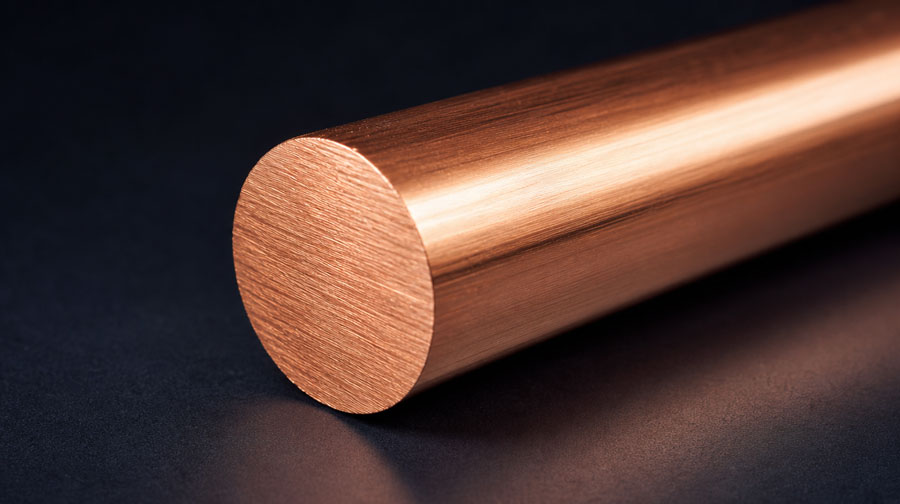
Oxygen free copper is a group of high-purity copper grades refined to contain virtually no dissolved oxygen and minimal other impurities. Our oxygen free copper rods serve as the preferred feedstock and component material for demanding electrical applications, thermal management systems, vacuum hardware, and cryogenic devices.
Typical copper content is ≥ 99.95% Cu for C10200 (OF grade) and ≥ 99.99% Cu for C10100 (OFE grade), with maximum oxygen content held below 0.001%. These grades are produced under carefully controlled conditions to prevent contamination and preserve the properties that make elemental copper so valuable as a conductor, and comply with ASTM B170 and equivalent EN/IEC designations.
WHY ENGINEERS CHOOSE OF / OFHC COPPER ROD
Reliability When It's Non-Negotiable
MATERIAL GRADES & STANDARDS
Selecting the Right Grade
Selection of the correct OF or OFHC grade is driven by required purity, maximum oxygen content, conductivity specifications, and applicable industrial standards. Impurity control matters more than simply chasing the lowest oxygen number — trace elements like silver, lead, tin, iron, and sulfur each reduce conductivity and can affect downstream process reliability.
| Grade (UNS) | Cu Minimum | Max Oxygen (ppm) | Conductivity (% IACS, Annealed) | Key Standards |
|---|---|---|---|---|
| C10100 (OFE) | ≈ 99.99% | ≤ 5 ppm (0.0005%) | ≥ 101% | ASTM B170 Grade 1; EN CW009A |
| C10200 (OF) | ≈ 99.95% | ≤ 10 ppm (0.0010%) | ≈ 100–101% | ASTM B170 Grade 2; EN CW008A |
| C11000 (ETP) | ≈ 99.90% | 200–400 ppm | ≈ 100% | ASTM B187; EN CW004A |
“Oxygen free” (OF) refers broadly to copper with oxygen below 10 ppm. “Oxygen free high conductivity” (OFHC) emphasizes that the material meets both low-oxygen and high electrical conductivity thresholds — typically 101% IACS or more at 20°C in the annealed state. “Oxygen free electronic” (OFE) is the highest-purity subset, with oxygen ≤ 5 ppm and total extraneous elements below 0.01%. Engineers should specify grade, maximum oxygen in ppm, and minimum conductivity in % IACS on drawings and purchase orders. Certificates of analysis or EN 10204 Type 3.1 mill test certificates with traceable heat and lot numbers are a standard requirement.
HOW IT'S MADE
A Production Route Built to Protect Purity
Oxygen free copper rod is produced through direct conversion of high-purity cathodes into rod form via continuous casting or upcasting, with strict control of atmosphere and melt chemistry throughout the refining process. The process begins with furnace charging using LME Grade A cathodes or equivalent extra high grade feedstock, protected from atmospheric oxygen using an inert gas cover or a carbonaceous flux layer over the melt surface.
- Atmosphere Control — inert gas or flux cover during melting and casting, with no atmospheric exposure permitted during critical phases.
- Vacuum Degassing & Filtration — removes dissolved gases and eliminates inclusions or slag from the melt.
- Continuous Monitoring — oxygen (ppm) and trace elements are tracked throughout production to hold OFHC limits.
CASTING & FORMING
From Cathode to Finished Rod


Process parameters — withdrawal speed, mold cooling rate, and melt temperature — directly influence surface quality, grain size, and internal soundness of the castings. Selected scrap streams such as Mill Berry or ETP scrap can sometimes enter the production cycle, but only under tight process control to meet OFHC oxygen and impurity limits.
PROPERTIES
Physical, Mechanical & Conductivity Properties
| Property | C10100 (OFE), Annealed | C10200 (OF), Annealed |
|---|---|---|
| Electrical Conductivity (% IACS) | ≥ 101% | 100–101% |
| Resistivity (µΩ·cm) | ~1.70 | ~1.72 |
| Thermal Conductivity (W/m·K) | ~391–400 | ~390–397 |
| Tensile Strength, Annealed (MPa) | 200–260 | 200–260 |
| Yield Strength, Annealed (MPa) | 70–100 | 70–100 |
| Elongation, Annealed (%) | 35–55% | 35–55% |
| Density (g/cm³) | 8.94 | 8.94 |
- If components will be brazed or heat-treated in a reducing atmosphere (hydrogen, forming gas), specify OFE or OFHC.
- For service temperatures above 200–300°C in hydrogen-bearing atmospheres, never use ETP copper.
- For UHV systems requiring bake-out at elevated temperature, OFE grade is preferred to avoid both embrittlement and outgassing.
- A related alloy, oxygen free phosphorus-containing copper (CuOFP), improves creep strength for long-term high-temperature exposure — used in nuclear waste canisters under the KBS-3 concept.
HIGH-TEMPERATURE PERFORMANCE
Built to Resist Hydrogen Embrittlement
When copper containing Cu₂O is exposed to hydrogen at elevated temperature, hydrogen diffuses into the metal and reacts with oxide inclusions at grain boundaries to form water vapor. Because this vapor cannot escape, pressure builds internally, causing intergranular cracking, blistering, and catastrophic loss of ductility — the mechanism that makes standard ETP copper unsuitable for reducing or hydrogen-bearing atmospheres.
Oxygen free copper lacks the oxygen needed for hydrogen embrittlement. With oxygen content below 5–10 ppm, the material can safely be used during high-temperature brazing and soldering, heat treatment in moist or reducing atmospheres, and operation in hydrogen-rich environments such as power generation equipment and vacuum furnaces.
INDUSTRIAL APPLICATIONS
Ideal For
Electrical & Electronic
High-frequency transmission components, precision signal conductors, transformer windings, busbars, and magnet coils.
High-End Audio & Video
OFC minimizes power loss in high-frequency lines and is preferred for signal transmission cables where fidelity matters.
Automotive & Aerospace
Critical wiring harnesses requiring reliability under vibration and thermal cycling.
Vacuum & Semiconductor
UHV chambers, plasma deposition hardware, sputtering targets, and semiconductor manufacturing tooling with near-zero outgassing.
Cryogenic & Scientific
Superconducting magnet windings, cryostats, particle accelerator components, and fusion research devices.
Thermal Management
Heat spreaders, cooling plates, injection mold inserts, and laser or power electronics cooling blocks.
Concrete application examples: RF cavity conductors operating in the MHz–GHz range under UHV at 10⁻⁹ mbar; power distribution busbars carrying >10 kA with temperature rise limits below 20–30 K; vacuum furnace elements brazed at 400–600°C in forming gas; and superconducting magnets at ~4 K requiring a high RRR stabilizer matrix.
SUPPLY & DOCUMENTATION
Technical Specifications
RFQ CHECKLIST
What to Include on Your Purchase Order
Specifying the correct oxygen free copper grade at the drawing stage prevents costly failures downstream. Consistent quality and full traceability are the baseline, not the exception — make sure every line item below is addressed.
- Confirm UNS grade (C10100 vs C10200) and required oxygen content in ppm.
- Specify temper (annealed, half-hard), mechanical property minima, and conductivity ≥ 101% IACS.
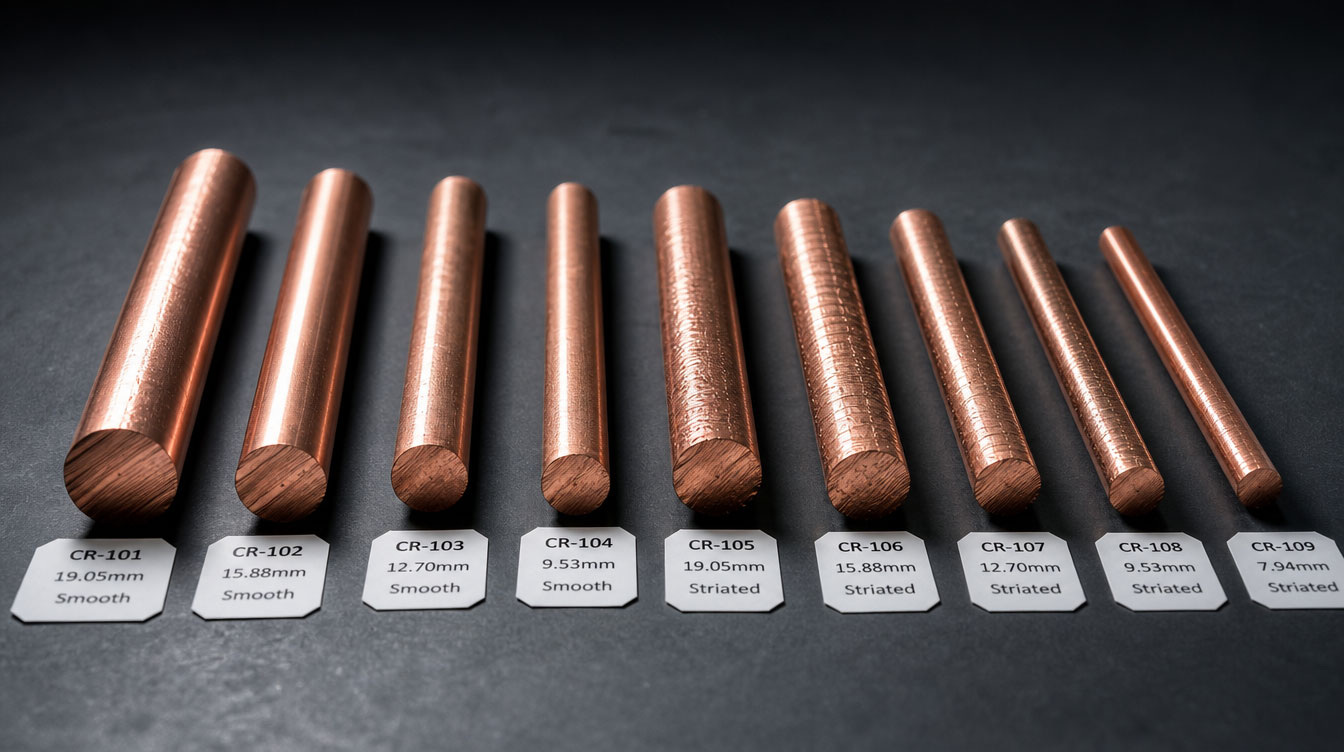
- Define dimensions, tolerances, surface finish, and form (bar, rod, coil).
- Require a mill test report with full chemical analysis, conductivity test, and traceable heat/lot number.
- Specify packaging and handling requirements for cleanliness-sensitive environments.
FAQ
Frequently Asked Questions
"Oxygen free" (OF) refers broadly to copper with oxygen below 10 ppm. "Oxygen free high conductivity" (OFHC) meets both low-oxygen and high conductivity thresholds — typically ≥101% IACS at 20°C. "Oxygen free electronic" (OFE) is the highest-purity subset, with oxygen ≤5 ppm and total extraneous elements below 0.01%.
ETP copper (C11000) carries roughly 200–400 ppm oxygen and about 100% IACS conductivity. OF and OFHC grades hold oxygen to 10 ppm or less and reach 101% IACS or more, with better corrosion resistance and no risk of hydrogen embrittlement.
Chemical analysis reporting Cu, O, and key trace elements (P, Ag, S, Fe, Ni, Pb) per heat, along with mechanical test results and conductivity measurements. EN 10204 Type 3.1 or 3.2 certificates with traceable lot and rod coil numbers are available.
Confirm the UNS grade and oxygen content required, temper and mechanical property minima, dimensions and surface finish, mill test report requirements, and any packaging or cleanliness handling needs.
Contact Us
Need a Reliable Copper Supplier? Let’s Talk.
- 135 Old Boiling Springs Road Shelby, NC 28152-0648
- (704) 482-8200
- (704) 482-8038